

Do you avoid thinking about the past for fear of becoming bitter?
In today’s society we are often told to ‘let it go, forget the past, and move on.’
But in fact, moving on prematurely from a painful experience can cause lingering feelings to remain hidden under the surface.
Did you know that bitterness isn’t a core feeling in itself, but a complex mixture of anger, sadness, disappointment?
Bitterness is a common response to unprocessed pain, especially if the event or experience was perceived as deeply unfair, and you had no control over it. For example, losing a spouse to illness, but also losses that represent something you never had, for example, not being able to have children.
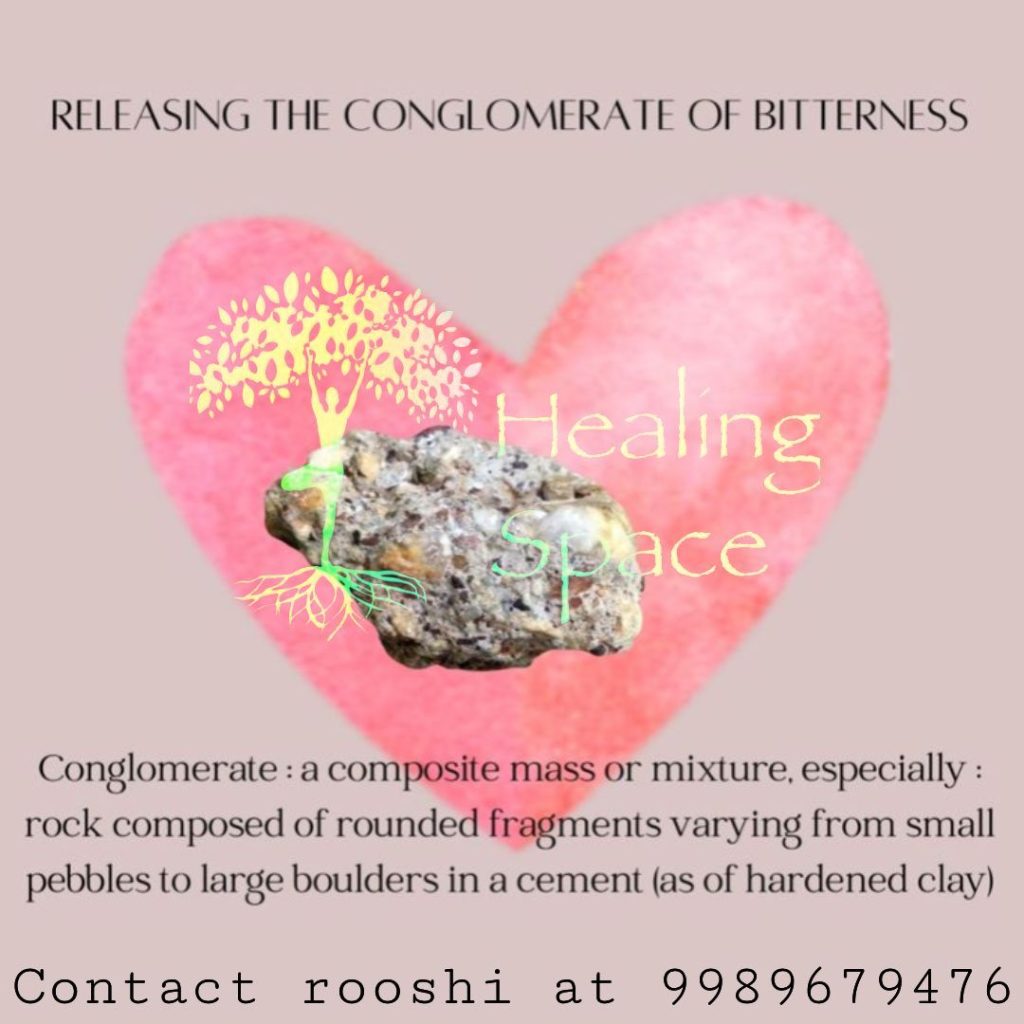
Bitterness involves mixed emotions that have hardened over time. That’s why I like the image of a conglomerate to describe this feeling. Because it tends to take hold over time, it can be hard to put words to it and express it in simple terms.
This leads to a vicious circle where it becomes harder to talk about – so you keep bottling it up or even keep it out of your own awareness, thinking that you’ve let it go.
So how can you spot if bitterness has taken root in your heart?
The main giveaway is that it tends to show up in your general mood. For example:
– Your baseline mood is often angry, disappointed, or negative
– You get irritated or bothered by seemingly little things
– The feelings don’t seem to have a clear root and are difficult to shake off
– Others’ happiness evokes envy and painful emotions for you, and you may even notice a strange sense of relief if things don’t go well for others (this can bring up shame but is a normal reaction to the hurt that underpins bitterness)
– You find that you’re never truly happy – as if you’re ‘living under a cloud’
– You start to feel bad about yourself and may start to withdraw for fear of being perceived as a ‘killjoy’
Most of us are at risk of harbouring bitterness at some point in our lives – so, how can we begin to dissolve and release these painful feelings?
First, it’s important not to rush this process. Contrary to what you may have been told, it’s not just to ‘forgive and forget.’ Self-kindness and giving yourself time is key.
It’s important to process the events and emotions that led to bitterness. That’s why therapy can be really helpful – especially if your friends and family think you ‘should be over it by now.’
Your therapist won’t tell you to ‘get over it.’ If it were that easy, you would have done that already!
We all deserve a chance to heal from bitterness, and dissolve that rock inside. If u need help to break the rock of bitterness u can connect with me Hi this is Rooshi a psychologist transformation coach and energy healer with 25 years of experience in helping people dissolve bitterness and have joy n peace.
But in fact, moving on prematurely from a painful experience can cause lingering feelings to remain hidden under the surface.
Did you know that bitterness isn’t a core feeling in itself, but a complex mixture of anger, sadness, disappointment?
Bitterness is a common response to unprocessed pain, especially if the event or experience was perceived as deeply unfair, and you had no control over it. For example, losing a spouse to illness, but also losses that represent something you never had, for example, not being able to have children.
Bitterness involves mixed emotions that have hardened over time. That’s why I like the image of a conglomerate to describe this feeling. Because it tends to take hold over time, it can be hard to put words to it and express it in simple terms.
This leads to a vicious circle where it becomes harder to talk about – so you keep bottling it up or even keep it out of your own awareness, thinking that you’ve let it go.
So how can you spot if bitterness has taken root in your heart?
The main giveaway is that it tends to show up in your general mood. For example:
– Your baseline mood is often angry, disappointed, or negative
– You get irritated or bothered by seemingly little things
– The feelings don’t seem to have a clear root and are difficult to shake off
– Others’ happiness evokes envy and painful emotions for you, and you may even notice a strange sense of relief if things don’t go well for others (this can bring up shame but is a normal reaction to the hurt that underpins bitterness)
– You find that you’re never truly happy – as if you’re ‘living under a cloud’
– You start to feel bad about yourself and may start to withdraw for fear of being perceived as a ‘killjoy’
Most of us are at risk of harbouring bitterness at some point in our lives – so, how can we begin to dissolve and release these painful feelings?
First, it’s important not to rush this process. Contrary to what you may have been told, it’s not just to ‘forgive and forget.’ Self-kindness and giving yourself time is key.
It’s important to process the events and emotions that led to bitterness. That’s why therapy can be really helpful – especially if your friends and family think you ‘should be over it by now.’
Your therapist won’t tell you to ‘get over it.’ If it were that easy, you would have done that already!
We all deserve a chance to heal from bitterness, and dissolve that rock inside. If u need help to break the rock of bitterness u can connect with me Hi this is Rooshi a psychologist transformation coach and energy healer with 25 years of experience in helping people dissolve bitterness and have joy n peace.