
Let’s understand stress in a interesting way
S T R E S S ….SSS ED
Let’s understand stress in a interesting way
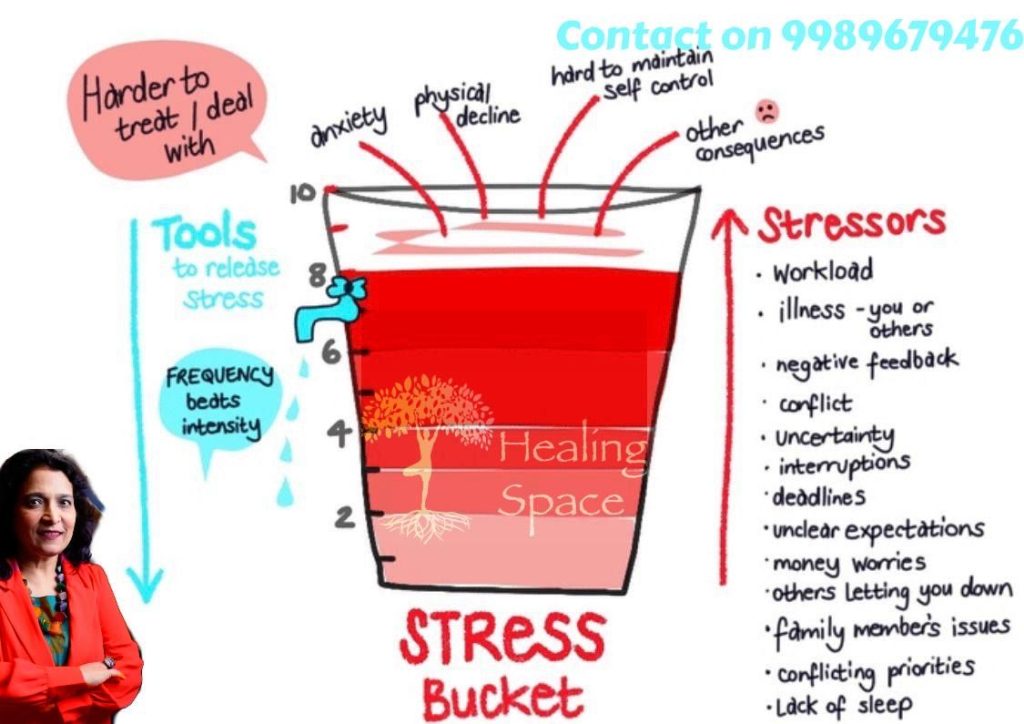
Stress bucket is used to describe how we accumulate stress from various sources, which fills up our mental and emotional capacity. If the bucket overflows, it can lead to negative consequences like anxiety or burnout. Balancing your stress bucket involves both reducing the amount of stress entering the bucket and increasing your capacity to handle stress.
Example: Sarah, a Working Parent
Sources of Stress (Filling the Bucket):
Work Stress: Sarah works a demanding job with tight deadlines and high expectations.
Family Responsibilities: She has two young children who need constant care and attention.
Household Chores: Daily tasks like cooking, cleaning, and managing the household add to her stress.
Financial Concerns: Worries about bills, savings, and future financial security contribute to her stress.
Health Issues: Recently, Sarah has been dealing with some minor health problems, which add to her stress levels.
Strategies to Reduce Stress (Reducing Inflow into the Bucket):
Time Management at Work: Sarah starts to prioritize her tasks more effectively and learns to delegate some responsibilities to her team members.
Family Support: She asks her partner to share more of the household chores and child-rearing duties, lightening her load.
Simplifying Household Chores: Sarah implements a more efficient cleaning schedule and uses meal prepping techniques to save time on cooking.
Financial Planning: She consults a financial advisor to create a clear budget and savings plan, reducing her financial worries.
Health Management: Sarah adopts a healthier lifestyle, incorporating regular exercise and a balanced diet to improve her overall well-being.
Strategies to Increase Coping Capacity (Enlarging the Bucket):
Mindfulness and Meditation: Sarah practices mindfulness and meditation daily to help manage her stress and increase her emotional resilience.
Social Support: She makes an effort to spend more time with friends and family, seeking their support and sharing her concerns with them.
Hobbies and Leisure Activities: Sarah dedicates time to her hobbies, such as painting and gardening, which help her relax and recharge.
Therapy and Counseling: She starts seeing a therapist to work through her stress and develop better coping mechanisms.
Physical Exercise: Regular physical activity, such as yoga and jogging, helps Sarah manage her stress levels and improve her mood.
Outcome:
By both reducing the inflow of stress and increasing her capacity to handle it, Sarah finds her stress bucket more balanced. She feels less overwhelmed and more in control of her life, improving her overall mental and emotional well-being.
This approach can be tailored to fit different individuals and their unique sources of stress and coping mechanisms. The key is to identify specific stressors and find practical ways to address them, while also building resilience and support systems. As a clinical psychologist with 25 years of experience I can help in creating individualised programs to help u overcome stress.
Example: Sarah, a Working Parent
Sources of Stress (Filling the Bucket):
Work Stress: Sarah works a demanding job with tight deadlines and high expectations.
Family Responsibilities: She has two young children who need constant care and attention.
Household Chores: Daily tasks like cooking, cleaning, and managing the household add to her stress.
Financial Concerns: Worries about bills, savings, and future financial security contribute to her stress.
Health Issues: Recently, Sarah has been dealing with some minor health problems, which add to her stress levels.
Strategies to Reduce Stress (Reducing Inflow into the Bucket):
Time Management at Work: Sarah starts to prioritize her tasks more effectively and learns to delegate some responsibilities to her team members.
Family Support: She asks her partner to share more of the household chores and child-rearing duties, lightening her load.
Simplifying Household Chores: Sarah implements a more efficient cleaning schedule and uses meal prepping techniques to save time on cooking.
Financial Planning: She consults a financial advisor to create a clear budget and savings plan, reducing her financial worries.
Health Management: Sarah adopts a healthier lifestyle, incorporating regular exercise and a balanced diet to improve her overall well-being.
Strategies to Increase Coping Capacity (Enlarging the Bucket):
Mindfulness and Meditation: Sarah practices mindfulness and meditation daily to help manage her stress and increase her emotional resilience.
Social Support: She makes an effort to spend more time with friends and family, seeking their support and sharing her concerns with them.
Hobbies and Leisure Activities: Sarah dedicates time to her hobbies, such as painting and gardening, which help her relax and recharge.
Therapy and Counseling: She starts seeing a therapist to work through her stress and develop better coping mechanisms.
Physical Exercise: Regular physical activity, such as yoga and jogging, helps Sarah manage her stress levels and improve her mood.
Outcome:
By both reducing the inflow of stress and increasing her capacity to handle it, Sarah finds her stress bucket more balanced. She feels less overwhelmed and more in control of her life, improving her overall mental and emotional well-being.
This approach can be tailored to fit different individuals and their unique sources of stress and coping mechanisms. The key is to identify specific stressors and find practical ways to address them, while also building resilience and support systems. As a clinical psychologist with 25 years of experience I can help in creating individualised programs to help u overcome stress.